Every lighting buyer has heard the same complaint: "the colored light looks great, but the white looks grey." That single sentence explains why the 3538 RGBW SMD LED has become the default choice for projects that need both saturated color and clean white light from one strip, one PCB and one BOM line.
Below we break down where the RGBW 4-in-1 package wins, what its numbers look like, and how to specify it correctly.
1. What "RGBW 4-in-1" Actually Means
A conventional RGB LED mixes red, green and blue to fake white — and it always costs you. Mixing three narrow spectra produces a white with weak cyan and low colour rendering, plus a visible hue drift as the strip dims. The 3538 RGBW package solves this by adding a fourth, independent white die (2700–6500 K) inside the same 3.85 × 3.5 × 1.1 mm body.
The result is four separately driven channels: R, G, B and W. Colour for effect, white for task lighting — switched in software, not in hardware.
| Parameter |
Value |
| Package |
3538 RGBW — 3.85 × 3.5 × 1.1 mm, 4-in-1 |
| Channels |
R / G / B / W — independently driven |
| Wavelength |
R 620–635 nm / G 515–525 nm / B 460–473 nm |
| White channel |
2700–6500 K, 10–12 lm |
| Luminous intensity |
R 600–800 mcd / G 1600–1800 mcd / B 500–600 mcd |
| Drive current |
20 mA per channel |
| Viewing angle |
120° |
| Lifespan |
60,000 hours |
| Chip source |
San'an / Epistar, strong anti-static design |
2. Six Application Scenarios Where RGBW Pays Off
Scenario 1 — Retail display and product highlighting. Merchandise needs a white accent that respects true colour, plus a brand colour wash for campaigns. One RGBW strip does both without a second fixture.
Scenario 2 — Hotel lobbies, cove and staircase lighting. Hospitality spaces switch from warm white ambience in the evening to coloured accent for events. RGBW keeps the white looking like white at every dimming level.
Scenario 3 — Architectural and facade accent. Bridges, museums and showrooms run scheduled colour scenes, while daytime scenes stay clean white — the mixed-white hue drift that plagues RGB designs disappears.
Scenario 4 — Signage and channel letters. Illuminated text must read as crisp white; logos must pop in brand colour. RGBW gives both from the same module.
Scenario 5 — Automotive and marine interior. Footwell, door and console accents in the owner's chosen colour, with a neutral white for reading lights — all inside the −40°C to +85°C range.
Scenario 6 — Entertainment, stage and event strips. Fast colour chases on the RGB channels, instant white wash on the W channel, no colour-wheel compromise.
3. Specification Notes Before You Order
- Four-channel controller required. RGBW needs 4 outputs plus a common anode or cathode; confirm polarity with the driver vendor before layout.
- Separate resistors per channel. Red runs at 1.8–2.4 V while green, blue and white sit at 2.8–3.4 V — sharing one resistor value will overdrive red.
- Check total dissipation. Budget 60 mW for red, 110 mW for green and blue, 80 mW for white when designing the PCB landing.
- Binning matters more with four dice. Ask for matched white colour bins per reel so a 20-metre run does not show patches.
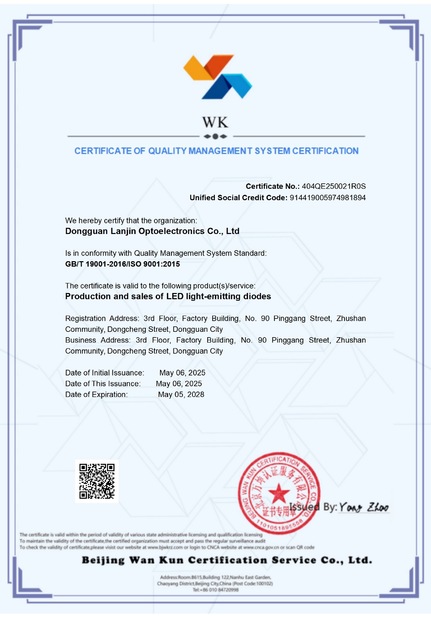
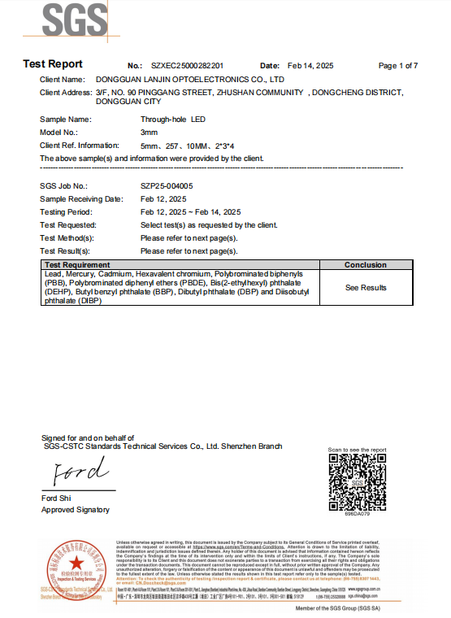
Soft plug — who makes it: this 3538 RGBW SMD LED is manufactured by Dongguan Lanjin Optoelectronics Co., Ltd., a LED factory established in 2005 in Dongguan, China. Lanjin operates ISO9001:2015 quality management in a 2,500 m² anti-static, constant-temperature workshop, produces with San'an and Epistar chips, and supplies RoHS / REACH compliant parts with 3-year warranty, 2,000 pcs per reel, MOQ 2,000 pcs and 5–15 day lead time. Custom wavelength, brightness and white colour-temperature bins are available for OEM and ODM projects.
4. The Commercial Argument
RGBW costs a little more per LED than RGB, and saves far more than that per finished fixture: one PCB instead of two, one power supply channel set instead of two, and no complaints about grey whites after installation. For any project sold on light quality rather than on the lowest BOM, the 3538 RGBW chip is the simpler engineering answer.
Request a 3538 RGBW SMD LED sample set from Dongguan Lanjin Optoelectronics to compare RGB and RGBW white quality in your own fixture.


 Your message must be between 20-3,000 characters!
 English