logo
Home News

company news about How to Choose Plant Grow Lights for Vegetable Greenhouses?

Certification
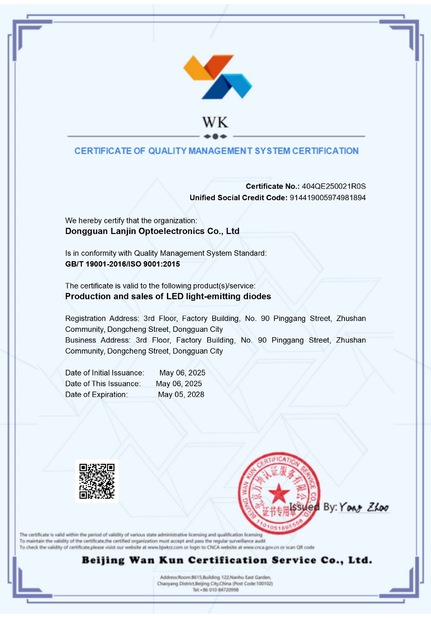
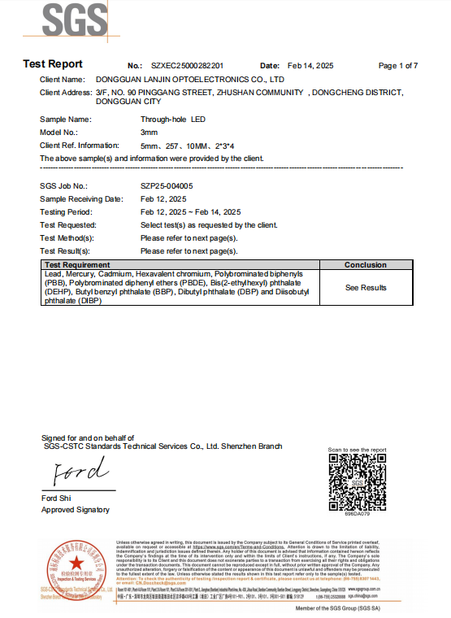
China Dongguan Lanjin Optoelectronics Co., Ltd. certification
I'm Online Chat Now
Company News
How to Choose Plant Grow Lights for Vegetable Greenhouses?
Latest company news about How to Choose Plant Grow Lights for Vegetable Greenhouses?

How to Choose Plant Grow Lights for Vegetable Greenhouses

Plant grow lights serve as essential auxiliary lighting equipment for vegetable greenhouses, perfectly suited for sun-loving vegetables including tomatoes, peppers, cucumbers, and bok choy. They deliver targeted light energy to enhance photosynthesis, effectively boosting crop yield, flavor quality, and overall produce quality.

Key Selection Factors & Recommended LED Models

1. Spectrum

Vegetable growth depends on specific light wavelengths, each playing a unique role in different growth stages:

  • Blue light (450–495nm): Promotes robust leaf growth and healthy root development, which is critical for seedling and vegetative growth stages.
  • Red light (620–750nm): Stimulates flowering and fruiting, serving as a core light source for mature plants.
  • Supplemental UV/Green light: Improves nutrient absorption efficiency and enhances light penetration into dense plant canopies.
Recommended LED Models for Spectrum Matching:
  • B302SYG4DCP (SM4043): 3mm DIP green LED with green diffused lens, ideal for supplemental green light to optimize light distribution in dense crop canopies.
  • B302SRD4DCP: 3mm DIP red LED (620–630nm), the core red light source for crop fruiting stages.
  • B302SBL4DCP: 3mm DIP blue LED (450–460nm), the primary blue light for vegetative growth of vegetables.
  • B502RGB4DCP: 5mm DIP RGB LED, featuring customizable spectrum to adjust light ratios for different plant growth stages.

2. Power

For most commercial vegetable greenhouses, a power range of 200W–400W is the most optimal choice:

  • Under 200W: Insufficient light intensity for mature crops, leading to stunted growth and low yield.
  • 200W–300W: Perfect for small-scale greenhouses or leafy green vegetables such as bok choy and lettuce.
  • 300W–400W: Best suited for fruiting vegetables (tomatoes, peppers, cucumbers) that demand higher light intensity.
  • Over 400W: Poses risks of light burn to plants and causes unnecessary energy waste, especially in enclosed greenhouse spaces.
Recommended Fixture Power Configurations Using Our LEDs:
  • 200W Fixture: Approx. 4,000pcs 3mm DIP LEDs (mix ratio: 40% blue, 50% red, 10% green)
  • 300W Fixture: Approx. 6,000pcs 3mm DIP LEDs (mix ratio: 35% blue, 55% red, 10% green)
  • 400W Fixture: Approx. 8,000pcs 3mm DIP LEDs (mix ratio: 30% blue, 60% red, 10% green)

3. Lifespan

LED grow lights are the premium choice for greenhouse use, as their lifespan is 3–5 times longer than traditional HPS/MH lights. LED lights can reach up to 50,000 hours, while conventional light sources only last 10,000–15,000 hours. This exceptional durability is vital for high-temperature and high-humidity greenhouse environments, reducing maintenance costs and equipment downtime.

Model Lifespan Highlights:
  • All BOSMFC 3mm/5mm DIP LEDs (e.g., B302SYG4DCP, B302SRD4DCP) boast a rated lifespan of 50,000+ hours, with stable and consistent light output throughout their service life.
  • Compared with COB LEDs, DIP models such as B302SYG4DCP feature better heat dissipation performance, further extending their service life in humid greenhouse conditions.

4. Brightness & Angle

Brightness (measured in lumens/lux) and beam angle are two key factors that directly affect the uniformity of light coverage for crops:

  • Brightness: Target 100–300 µmol/m²/s (PPFD) for vegetative growth stages, and 400–800 µmol/m²/s (PPFD) for fruiting stages.
  • Beam Angle: 60°–120° beam angles ensure even light coverage across crop rows; narrow angles (30°–45°) are more suitable for tall-growing crops.
Recommended LED Models for Brightness & Angle Control:
  • B302SYG4DCP (SM4043): 1.2–1.5lm per unit, 120° diffused lens, perfect for wide-range and uniform light distribution.
  • B502SRD4DCP: 2.0–2.5lm per unit, 60° lens, providing focused high-brightness light for fruiting tomatoes and peppers.
  • Adjustable Fixtures: Pair BOSMFC LEDs with dimmable drivers to finely adjust brightness and spectrum for seedling, vegetative, and flowering stages respectively.

Conclusion

Choose suitable plant grow lights by balancing spectrum, power, lifespan, brightness, and beam angle, and prioritize reliable BOSMFC LED models like B302SYG4DCP (SM4043), B302SRD4DCP, and B302SBL4DCP. These models meet the growth needs of various vegetables and adapt to practical greenhouse operating conditions, delivering stable performance, long service life, and customizable light output, making them the ideal option to maximize vegetable crop yield and quality.


Pub Time : 2026-03-30 10:11:06 >> News list
Contact Details
Dongguan Lanjin Optoelectronics Co., Ltd.

Contact Person: Miss. Ava Huang

Tel: +86 18819512052

Fax: 86-0769-89616935

Send your inquiry directly to us (0 / 3000)